.png)
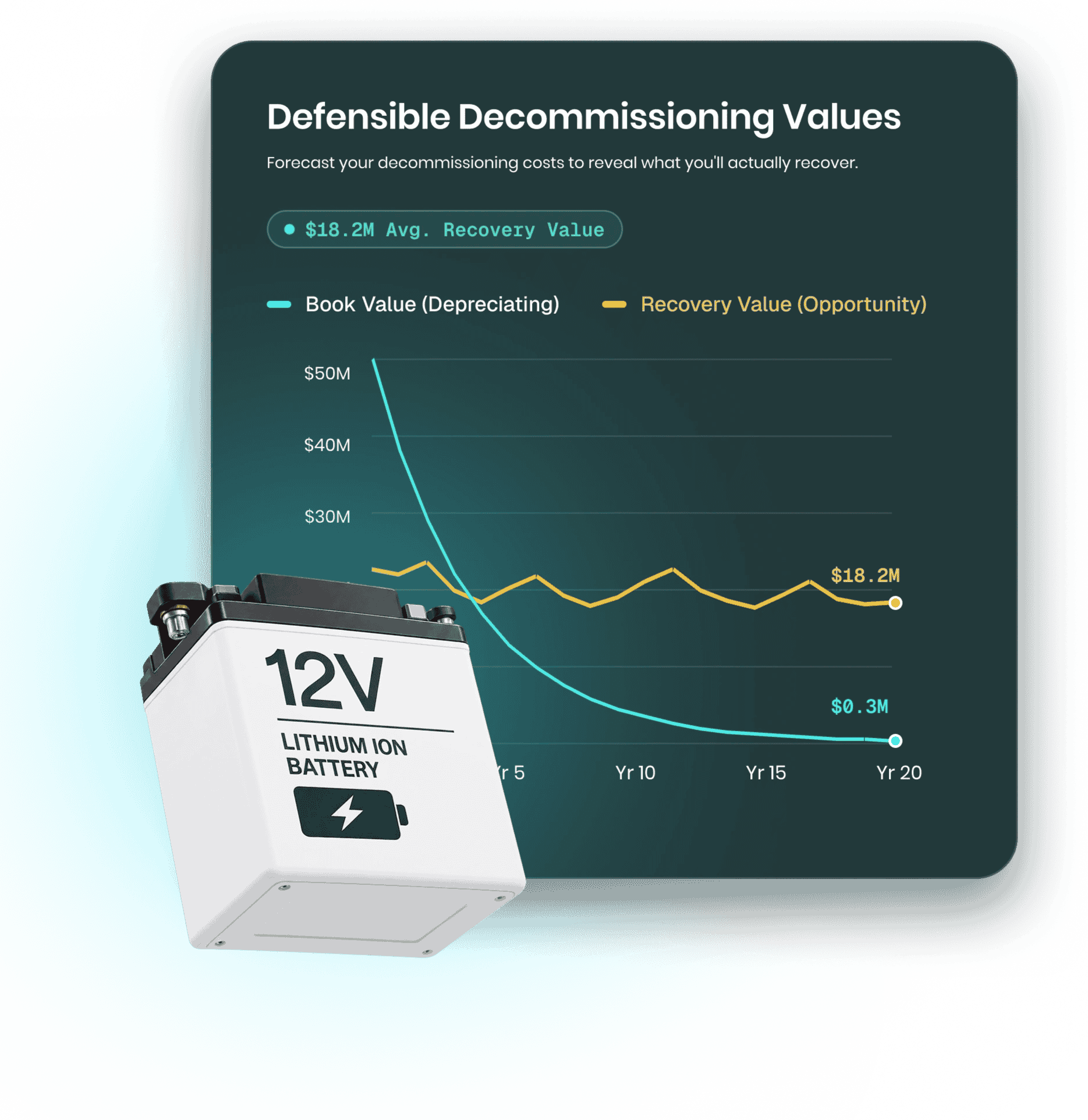
Defensible Decommissioning Values
Assets depreciated to zero can have
significant recovery value
significant recovery value
Forecast your decommissioning costs to reveal what you'll actually recover. Whether you're securing a decommissioning bond, optimizing your portfolio, or approaching end-of-life, you can turn costs into value.
There Was No Benchmark for Energy After-Market Valuations. Until Now.
Planning Ahead
Right-size your bond from the start. Free up capital locked in over-reserves.
Optimizing Your Portfolio
Know what your assets will recover before you repower, refinance, or reposition.
Approaching End of Life
Maximize recovery. Execute the exit strategically with defensible numbers.
What’s Included

Fast Delivery
No months-long consulting engagements. Receive a completed decommissioning forecast within 10 business days.

Built for Bond Sizing
Avoid tying up unnecessary capital with oversized bonds or exposing yourself with underestimated liabilities. Get a market-grounded analysis for accurate bond calculations.

Recovery Values That Reflect Today's Market
Recovery value changes with commodity prices and secondary market demand. Plans reflect real transactions and current market conditions so your numbers remain relevant.

Scenario Analysis
Compare different recovery scenarios to understand how changing market conditions may impact your future liability and value opportunities.

3 Months of Monitoring
Run updated residual value reports for that site after your appraisal is complete at no additional cost.

Free Valuation Studio Reports
Generate residual value reports for more sites in your portfolio using Buckstop's Valuation Studio.
389%
mispricing found in
one salvage value
one salvage value
3,000+ MW
Solar & storage capacity analyzed
30 Yr
forward price projections
4,000+
manufacturers in our equipment catalog
Trusted Across the
Renewable Asset Lifecycle
Asset Owners & Operators
Reveal hidden end-of-life values. Right-size reserves. Free up capital.
Surety Providers
Market-backed analysis grounded in current conditions, not arbitrary percentages.
Lenders & Project Finance Teams
Defensible recovery scenarios for loan modeling and stress testing.
Developers & EPCs
Transparent methodology and traceable sources to move regulatory approvals faster.
Regulators & Compliance Teams
Independent, standardized reporting that's easy to verify, compare, and defend.
Make Decommissioning Decisions Using Numbers You Can Defend
Whether you're preparing for bond requirements, financing, compliance, or end-of-life planning, Buckstop delivers a decommissioning forecast grounded in today's market conditions and ready in 10 business days.
Frequently Asked Questions
How long does a decommissioning plan take?
Can the report be used for bond sizing?
Do recovery values account for current commodity prices?