.png)
Valuation Studio
Get market-backed asset valuations in minutes, not weeks. Make insurance, financing, decommissioning, and recovery decisions with confidence.
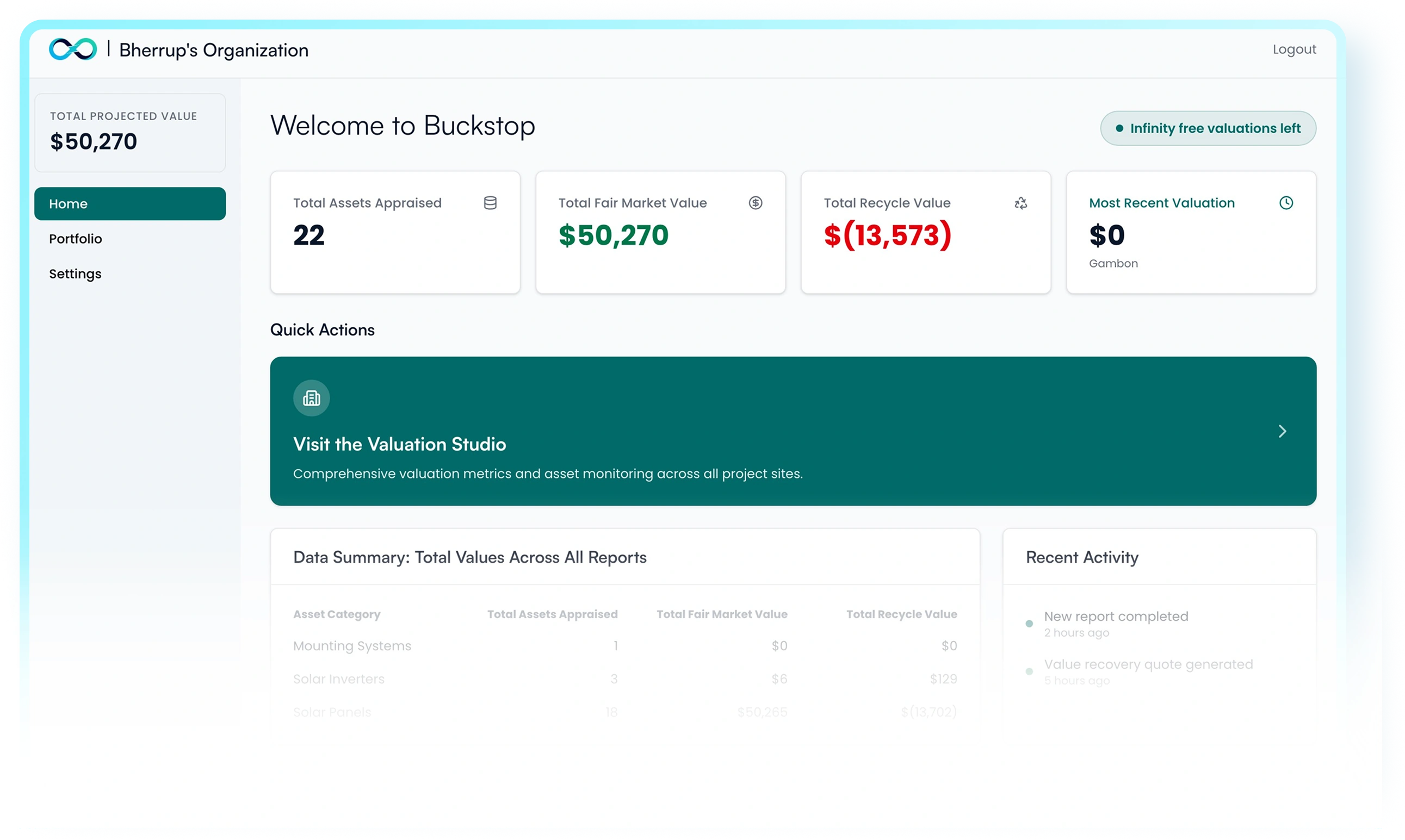
One valuation process covering outcomes across the lifecycle of the asset
The sources you rely on to value renewable energy assets were not built for the job. Each tells part of the story. Very few deliver a Decision-Grade valuation that stands up.
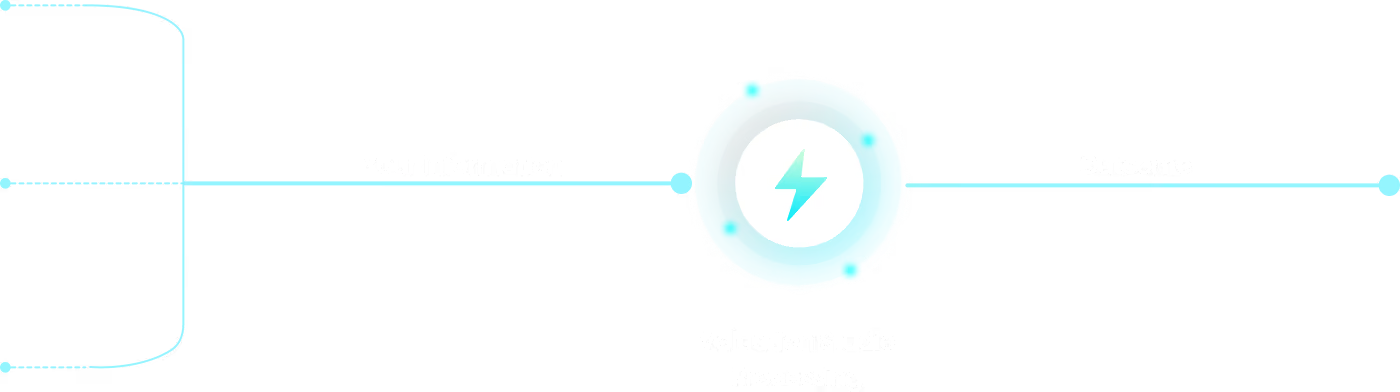
 Replacement Cost New
 Market Value
 Salvage Value
Decisions that depend on that number
How much to insure, how much to lend against, when to repower, what to reserve, get made on values that do not reflect the market. Valuation Studio transforms fragmented data into market-grounded asset value intelligence, that you can act on and defend.
The Most Comprehensive Asset Intelligence Database
3,000+ MW
Solar & storage capacity analyzed
22
Commodity & secondary market data sources, updated daily
1.3M+
Assets in our database, and growing daily'
One Platform for the Full Asset Lifecycle
On-Demand Valuations
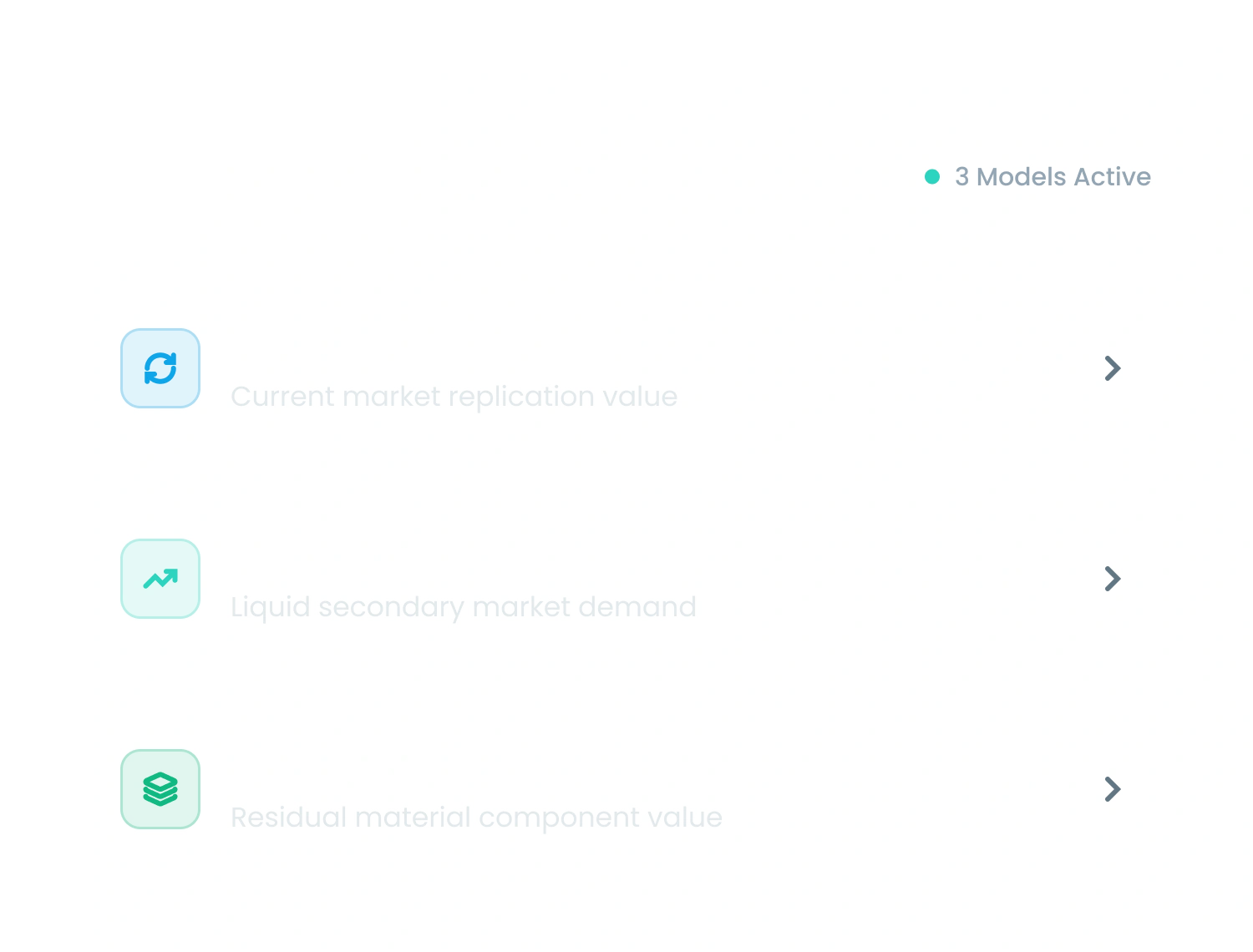
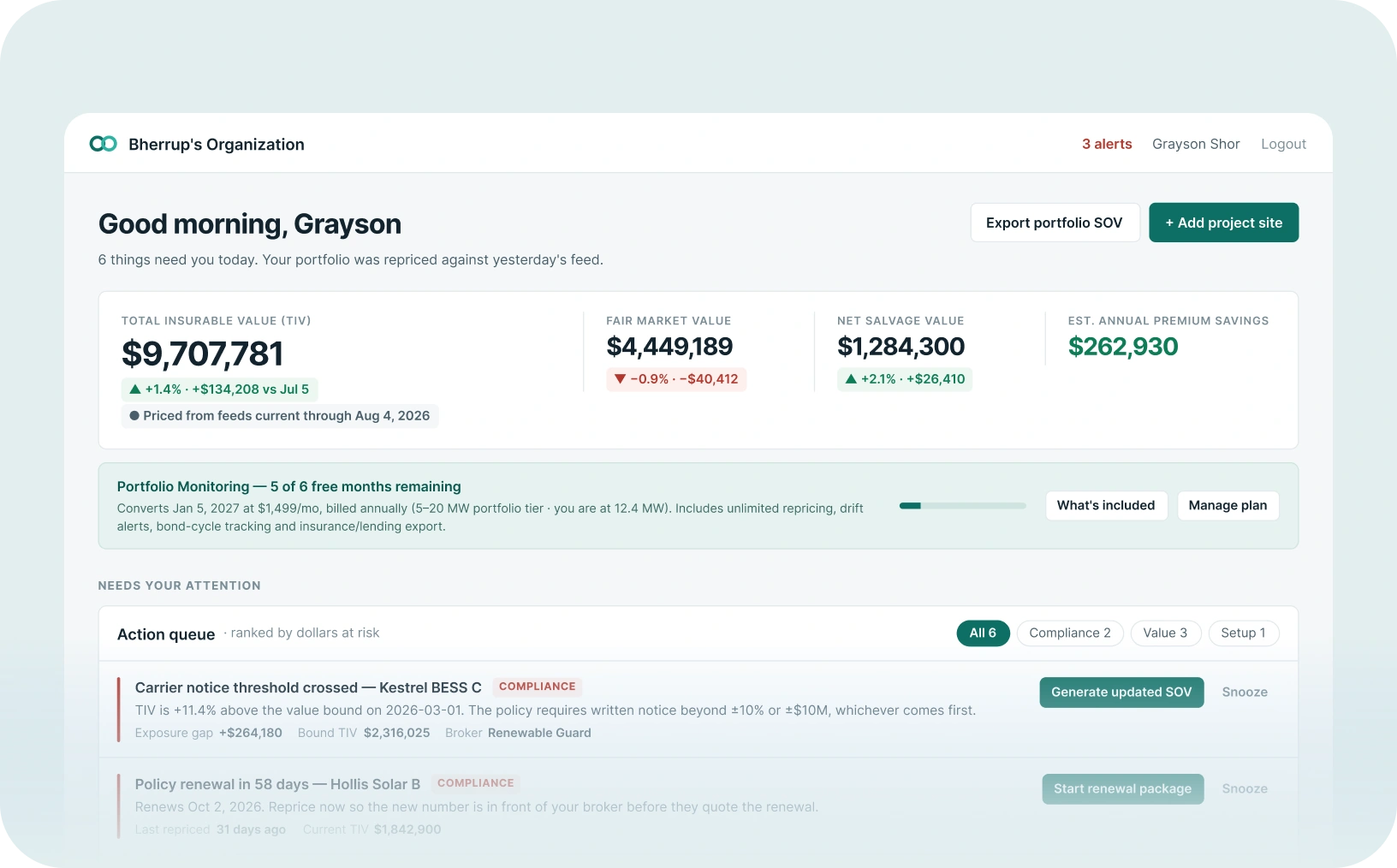
Portfolio Monitoring
Your Valuations Are Just the Beginning
Convert valuations into the reports and documentation required for financing, insurance, transactions, compliance, and end-of-life planning. No re-entry. No starting over.
.avif)
Certified Appraisals
.avif)
Decommissioning Forecasts
.avif)
Disposition Services
.avif)
Insurance SOV
Refinancing Reports
Residual Value Index
Quarterly Repricing
How Valuation Studio Strengthens Your Workflow
Traditional Approach
 Static spreadsheets
- Historic assumptions
- Single valuation method
- Manual research
- Point-in-time reports
- Limited transparency
Valuation Studio
 Continuously updated asset intelligence
- Current transaction-backed market data
- Replacement Cost, Resale Value, Salvage Value
- AI-powered Algorithmic Assay
- On-demand portfolio monitoring
- Confidence-scored, fully traceable outputs
What You Get with Valuation Studio
Three Valuation Workflows
Trusted Methodology
Current Market Intelligence
Confidence Scoring
Market inputs update
Easy to get started
Planning & Permitting
Understand county level regulations, decommissioning liabilities, and
requirements to get your project to COD faster.
- 1Insurance & Risk
Right-size insurance coverage using market-grounded recovery values that support underwriting decisions, policy renewals, and claims.
- 3Asset Management
Monitor changing portfolio values, identify recovery opportunities, and make repowering or disposition decisions with greater confidence.

.avif)
- 2Lending & Project Finance
Evaluate collateral using residual values that better reflect recoverable market value across refinancing, default, and exit scenarios.
- 4Recovery & Disposition
Value Recovery resale, refurbishment, recycling, and scrap opportunities before assets reach end-of-life.
Start with a free valuation
You already have the asset details. Upload it to
Valuation Studio and get market-backed values in minutes.