Improve your value recovery margins with ease.
Recovery and liquidation decisions fail when pricing is unclear. Teams are forced to act fast while relying on outdated assumptions, fragmented market signals, or third-party opinions that cannot be verified.
Before the result is predictable; assets are undersold, margins disappear, or recovery costs exceed expectations. Buckstop brings pricing clarity before recovery actions begin.
The Core Recovery Questions
Buckstop Answers
is it worth more as scrap?
today? How long will it
take to sell?
and regulation affect
recovery outcomes?
buy or sell my assets?
Buckstop turns recovery decisions into pricing decisions grounded in real transactions.
How Buckstop Supports
Resellers and Recyclers
Transaction-backed price discovery
Pathway comparison
Margin protection
Regulatory planning and compliance
Time Matters. 

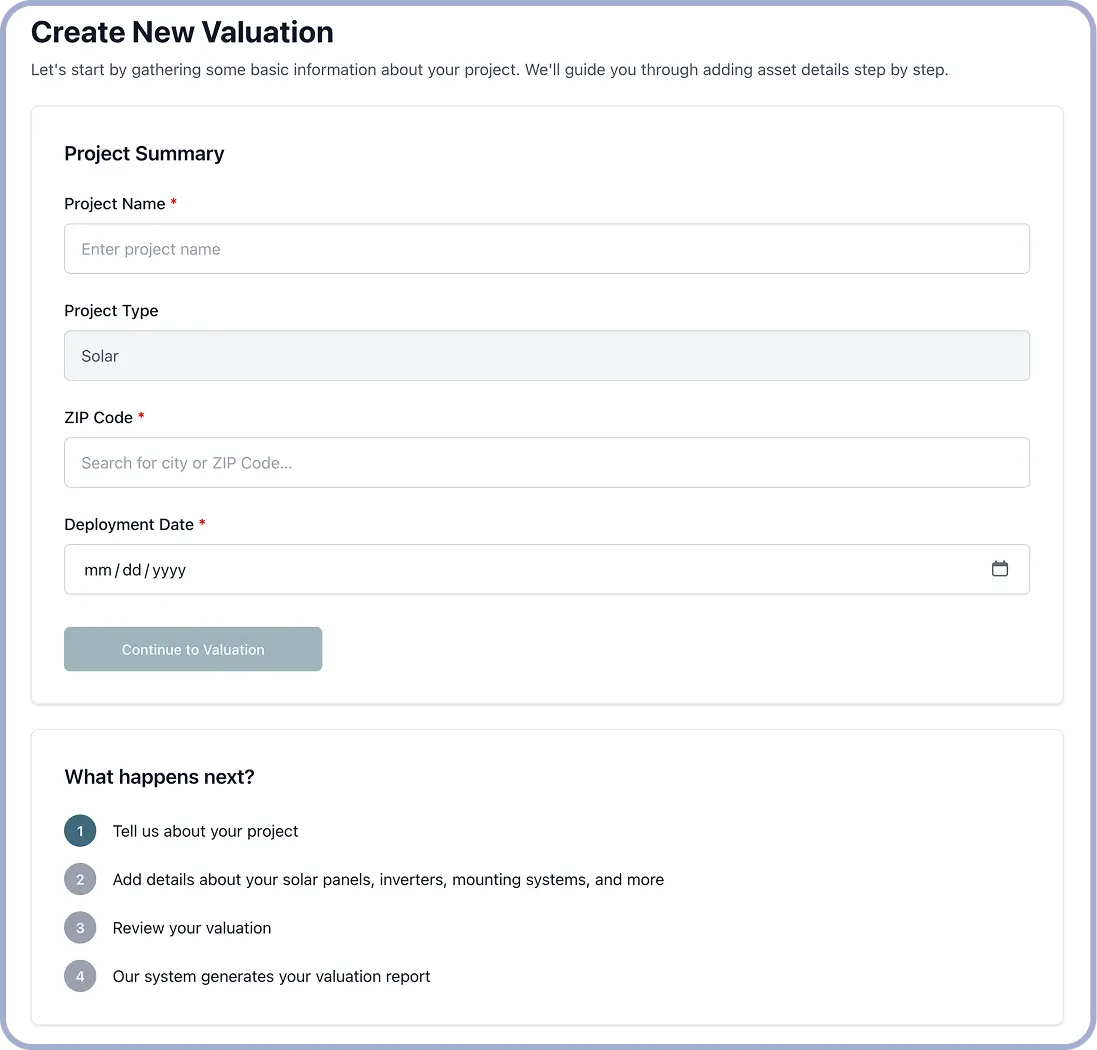
Create Quotes in Seconds.
Recovery work is often urgent and repetitive.
Buckstop automates valuation and reporting so teams can assess opportunities
and generate quotes faster while still using defensible pricing logic.
Frequently Asked Questions
The decision between reselling, refurbishing, recycling, or scrapping a solar asset is driven by a combination of market demand, asset condition, and recovery economics. Buyers look at remaining useful life, performance degradation, and compatibility with current technology standards to assess resale potential. Refurbishment depends on whether the cost of restoring the asset can be justified by the resale value it unlocks. Recycling and scrapping are influenced by commodity recovery rates, material composition, and processing costs. The most important factor is pathway-level value comparison, where each option is evaluated based on net recovery after logistics, labor, and regulatory costs. Without real data across these variables, teams default to the easiest option rather than the most valuable one.
Commodity price shifts have a direct and often volatile impact on solar scrap recovery value because materials like aluminum, copper, and silicon are core contributors to recovery economics. When commodity prices rise, the value of recycled materials increases, making recycling pathways more attractive. When prices fall, recovery margins shrink, and what once looked viable may become uneconomical. These fluctuations can significantly change the expected salvage value within short timeframes. Recovery decisions that rely on static assumptions fail to capture this variability, leading to mispriced expectations. Accurate recovery valuation requires continuously updated pricing inputs that reflect real market conditions rather than historical averages.
Freight costs and local regulations play a critical role in determining net recovery margins because they directly affect the cost of moving and processing assets. High transportation costs can erode the value gained from resale or recycling, especially when assets need to be shipped across regions to reach viable buyers or facilities. Local regulations, including environmental compliance, disposal requirements, and permitting processes, can add additional layers of cost and complexity. In some cases, regulatory constraints can limit available recovery pathways altogether. Net recovery value is therefore not just about what the asset is worth, but what remains after logistics and compliance costs are fully accounted for.
Recovery teams often undersell assets during liquidation because they operate under time pressure, limited market visibility, and risk aversion. The priority in many liquidation scenarios is speed and certainty rather than value maximisation. Without access to real-time market data or a clear understanding of alternative recovery pathways, teams default to quick sales at discounted prices. In addition, fragmented buyer networks and lack of standardized valuation frameworks make it difficult to benchmark offers effectively. This leads to decisions that prioritise immediate disposal over optimised recovery, resulting in significant value leakage across portfolios.
The Environmental Protection Agency classification of solar panels under universal waste is expected to streamline handling and transportation requirements, reducing regulatory friction in the recovery process. By simplifying compliance standards, it lowers the administrative and operational burden associated with disposal and recycling. However, it may also introduce new guidelines that standardize how panels are processed, which could shift cost structures depending on how facilities adapt. Overall, the change is likely to improve recovery efficiency and expand viable recycling pathways, but the exact cost impact will depend on regional implementation and infrastructure readiness.
Buckstop generates defensible recovery quotes by combining transaction-backed data, real-time market inputs, and pathway-specific valuation models into a single system. Instead of relying on manual estimates or outdated benchmarks, it evaluates multiple recovery options simultaneously and calculates net value based on current conditions. This includes factoring in commodity prices, logistics costs, regulatory constraints, and buyer demand. The result is a quote that reflects actual recoverable value rather than theoretical assumptions. Because the methodology is consistent and data-driven, these quotes can be used confidently in financing, underwriting, and claims decisions without requiring extensive manual validation.
A significant amount of capital is routinely lost during solar asset liquidation due to suboptimal recovery decisions and lack of market visibility. In many cases, assets are sold quickly at discounted prices without evaluating alternative pathways that could yield higher returns. The absence of standardized valuation frameworks and real-time data leads to conservative or uninformed decisions, especially under time constraints. Across large portfolios, even small inefficiencies in recovery can compound into millions in lost value. This hidden leakage often goes unnoticed because it is embedded in operational processes rather than explicitly measured, making it one of the most overlooked areas of financial optimisation in solar asset management.
.png)