.avif)
Confidence Starts With a Defensible Methodology
When every financing decision, insurance policy, audit, or recovery strategy depends on your valuation, the methodology behind it matters just as much as the final number.
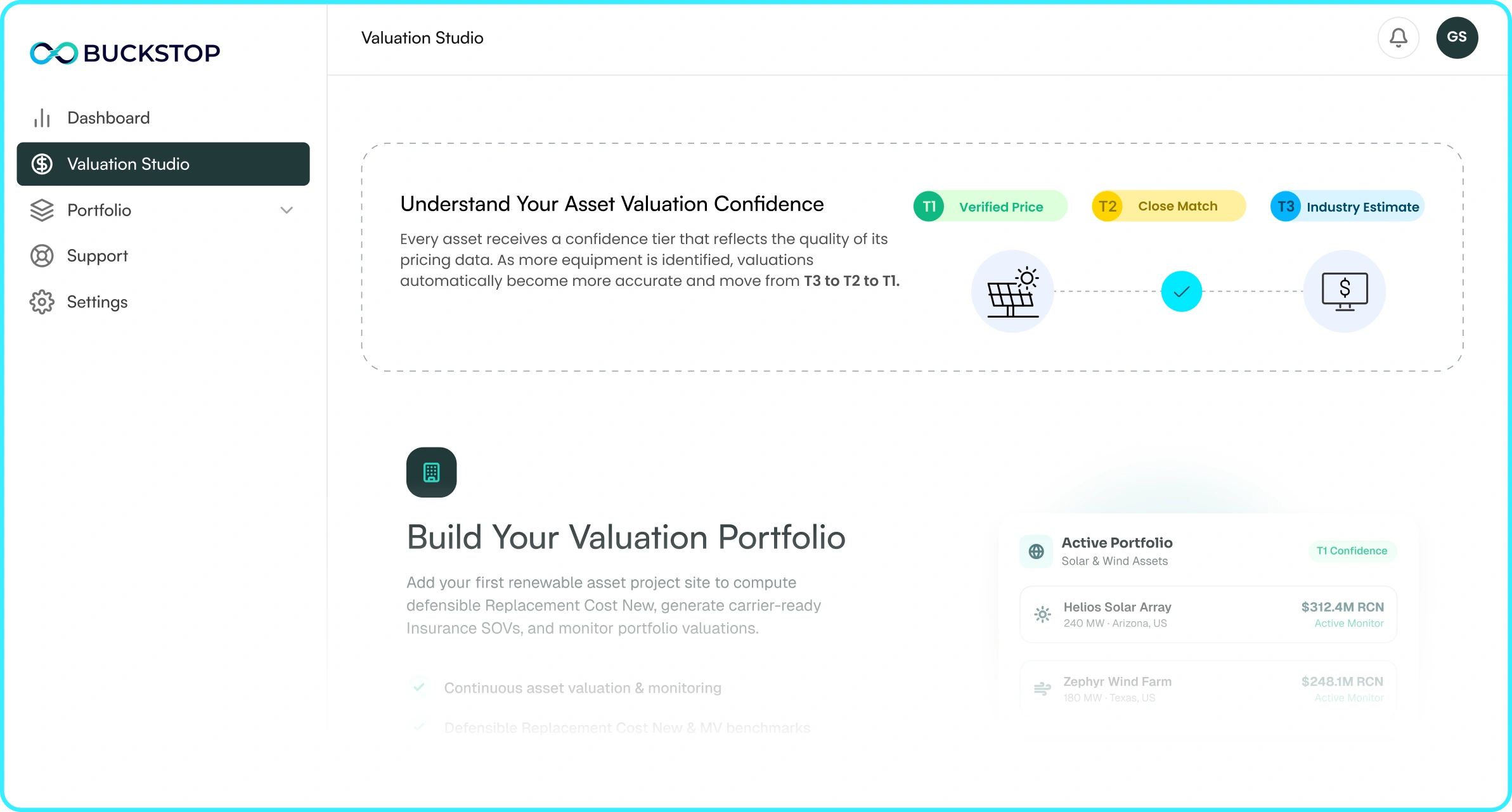
Why the number holds up
Every valuation runs through the Buckstop proprietary Algorithmic Assay
Five tiers
of verified data

Active-market transactions, secondary and scrap pricing, technical specifications, economic and commodity inputs, and real-world recovery history. The number reflects how assets are actually bought, sold, and recovered.

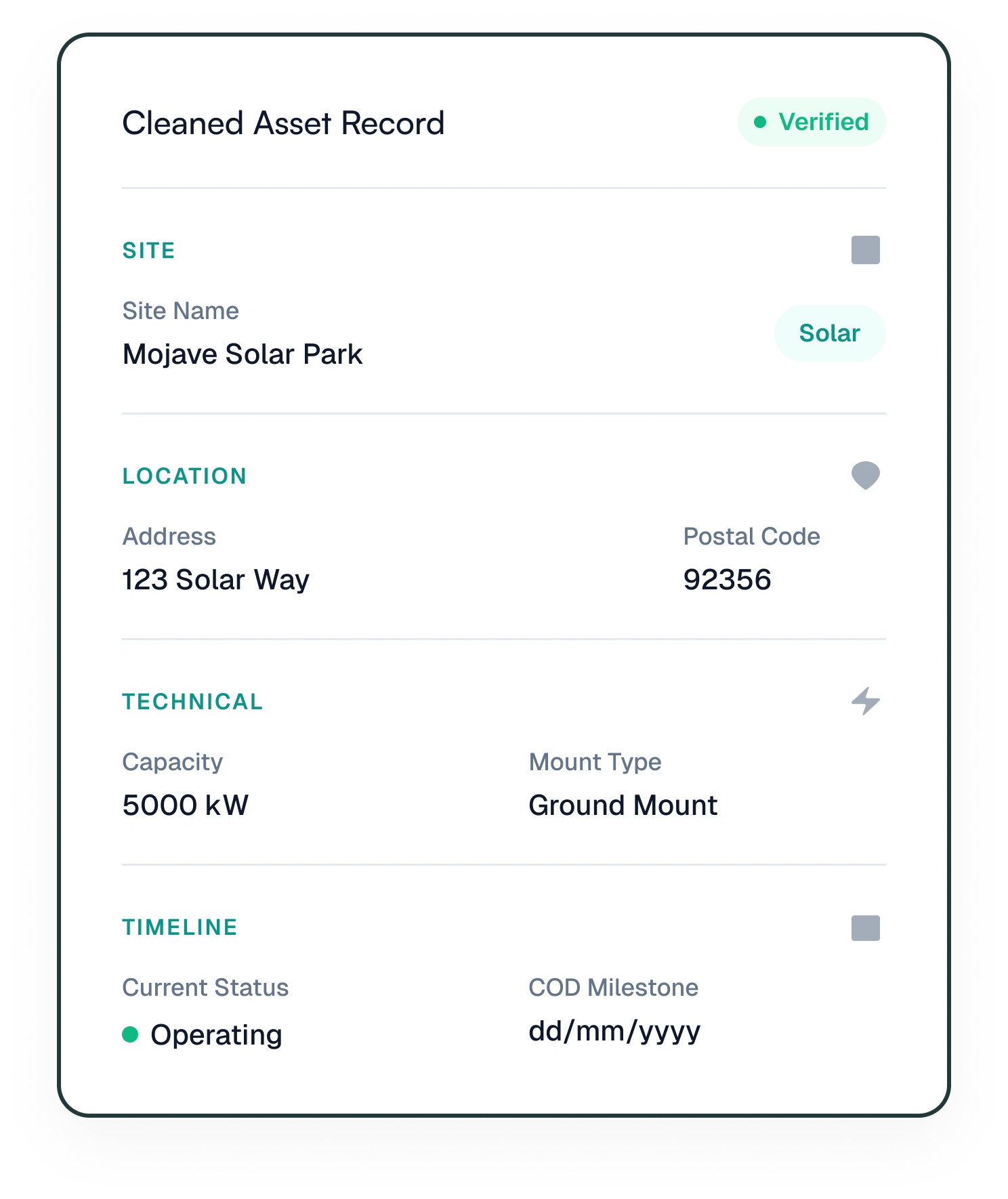
Clean,
canonical records
Credentialed
human review

The methodology drafts the valuation. A credentialed appraiser reviews and signs every conclusion, calibrated against real recovery data from appraisers, EPCs, insurers, and disposition companies.
Condition-based valuation
Functional assets are valued against comparable transactions. Damaged or obsolete assets are valued on material composition and current recycling prices, with logistics and handling factored in.
Full traceability,
honest about uncertainty

Every data point traces back to its source, so the trail can be reconstructed on request. Where data is thin, Buckstop reports a confidence level instead of false precision.
From Raw Market Data to Defensible Valuations
Buckstop valuations follow a disciplined process, combining multiple layers of market intelligence, proprietary algorithms, and human expertise to produce consistent and defensible results.
Build the Complete Market Picture
Buckstop combines five independent sources of information to understand how renewable energy assets behave across primary, secondary, and end-of-life markets.

.avif)

Active Market Transactions
Secondary & Scrap Markets
Technical Specifications
Economic & Market Conditions
Real-World Transaction History
Clean the Data Before Valuing the Asset
Industrial asset data is rarely clean. The same piece of equipment may appear under multiple model numbers, inconsistent product names, outdated manufacturers, or incomplete specifications.
Buckstop's proprietary Entity Resolution engine automatically identifies duplicates, reconciles conflicting records, and creates a single trusted asset profile before any valuation takes place. This ensures valuations are built on accurate information instead of fragmented datasets.
Determine the Right Recovery Path
Not every asset should be valued the same way. Buckstop first determines the asset's condition before selecting the valuation model most appropriate for its recovery pathway.
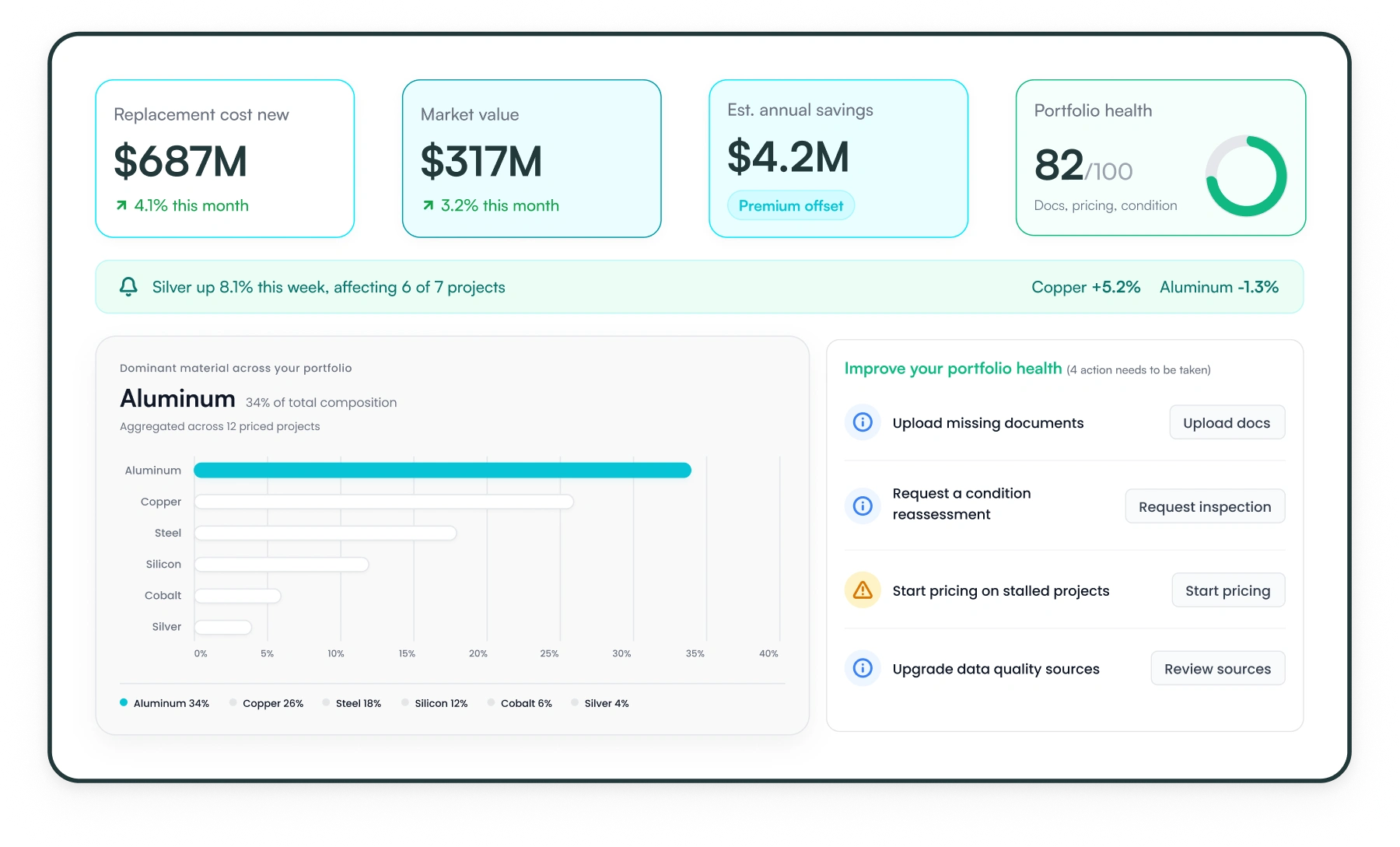
Resale Value
Material Recovery Value
Real-World Adjustments
Validate Every Valuation
Buckstop combines automated valuation models with human oversight to ensure every report remains accurate, transparent, and defensible.
Expert Review
Ground-Truth Calibration
Complete Traceability

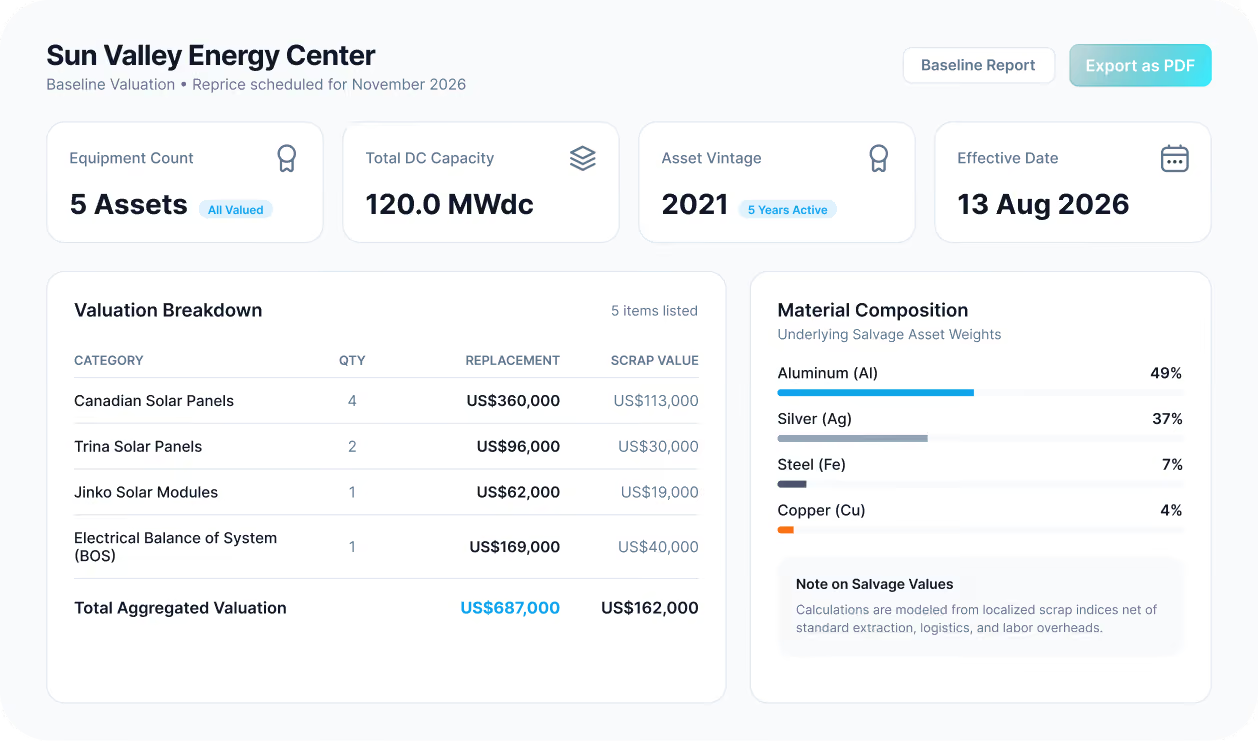
Deliver a Valuation You Can Defend
The final output is more than a valuation report.It's a transparent assessment supported by current market intelligence, documented assumptions, and repeatable methodology that stands up to commercial and regulatory scrutiny.
Built for Institutional Trust
Renewable infrastructure decisions require more than accurate numbers. They require confidence that those numbers were produced securely, consistently, and transparently.
Tenant Isolation
Purpose-Built Algorithms
Verified Data Sources
Data Sovereignty
Why This Methodology Matters
Better methodology produces better decisions. Whether you're underwriting a loan, placing insurance, preparing for an audit, or evaluating an acquisition, confidence comes from knowing exactly how a valuation was produced.
Buckstop's methodology combines market intelligence, proprietary technology, and expert validation to produce valuations you can explain, defend, and act on.
Confidence Starts With a
Defensible Methodology
When every financing decision, insurance policy, audit, or recovery strategy depends on your valuation, the methodology behind it matters just as much as the final number.
.avif)