Upgrade your assets
with pricing clarity
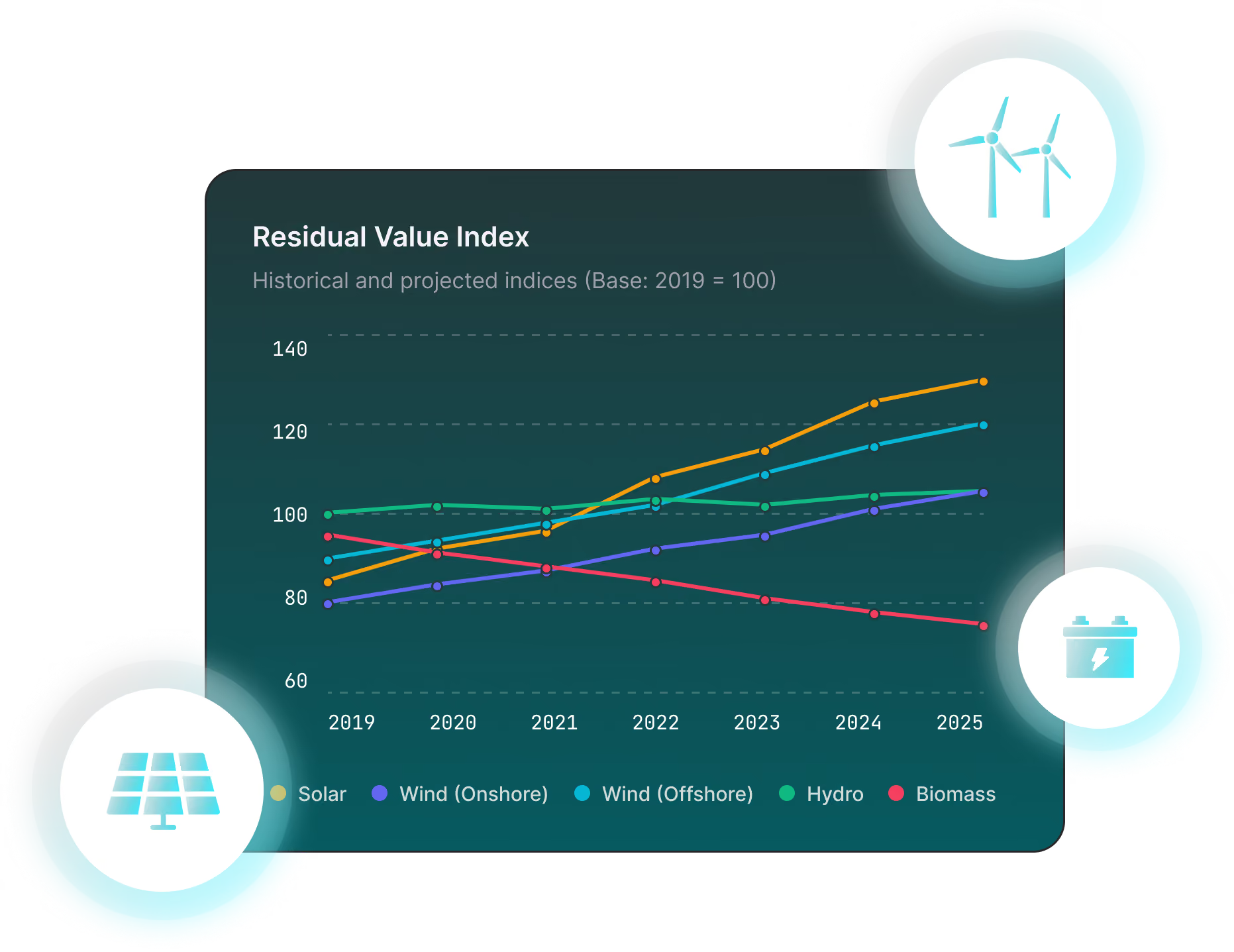
Repowering and upgrade decisions are often made without a clear view of what existing assets are actually worth, what can be recovered, or when value starts dropping off. That uncertainty quietly erodes capital.
Buckstop brings residual value into the upgrade conversation early.

The Upgrade Questions Buckstop Answers
or wait?
from existing assets before replacement?
recycling make more
sense?
the outcome?
Buckstop helps teams choose the upgrade path that protects capital, not just capacity.
How Buckstop Supports
Asset Upgrade Decisions
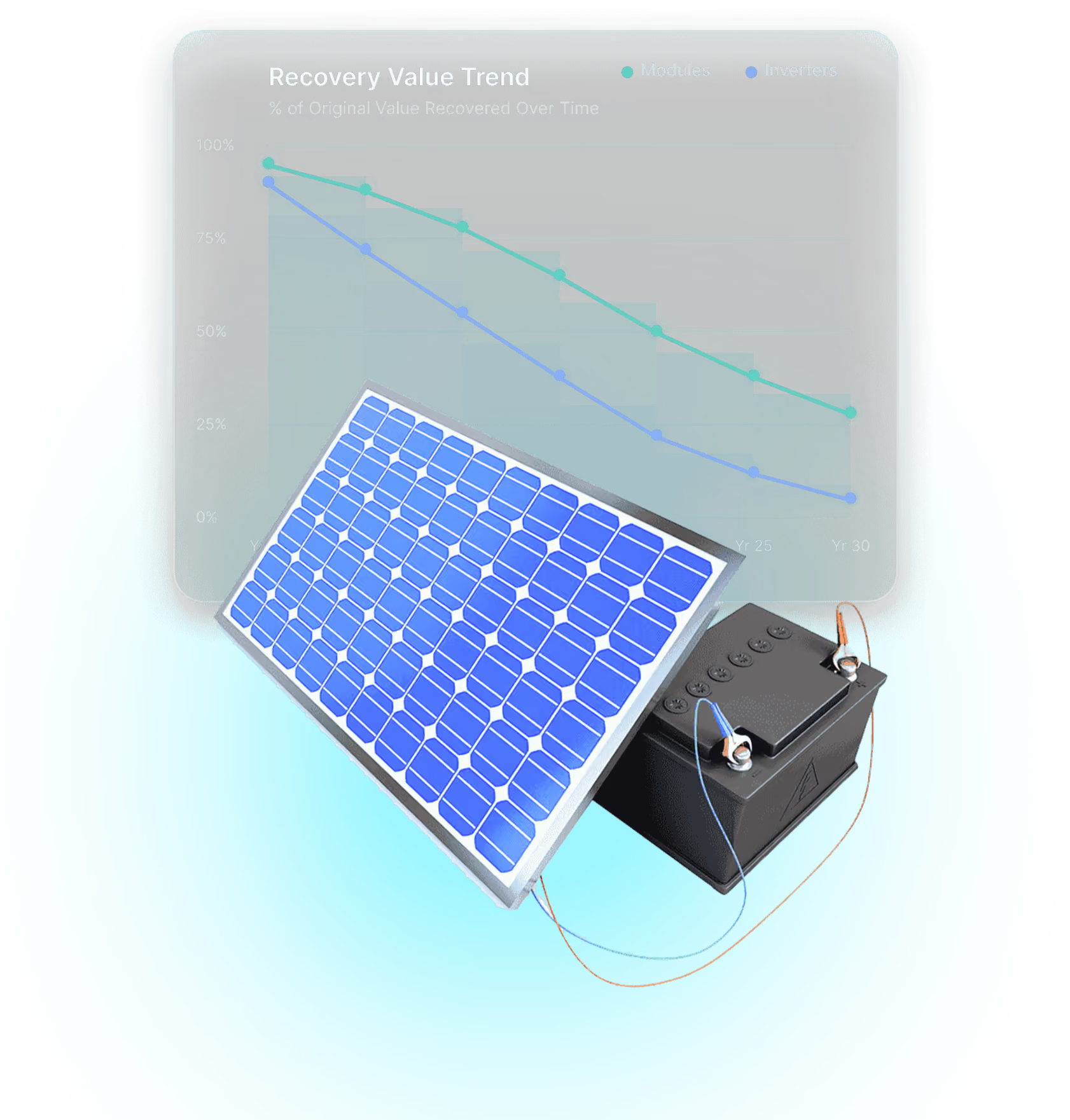
Residual value visibility before action
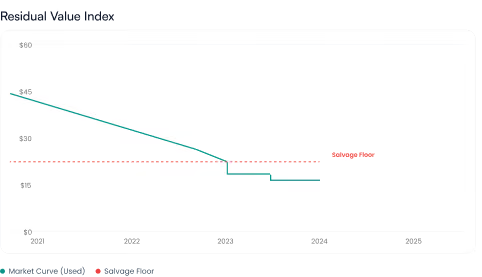
Timing sensitivity insights
Upgrade tradeoff analysis
recoverable value to avoid premature write-downs.
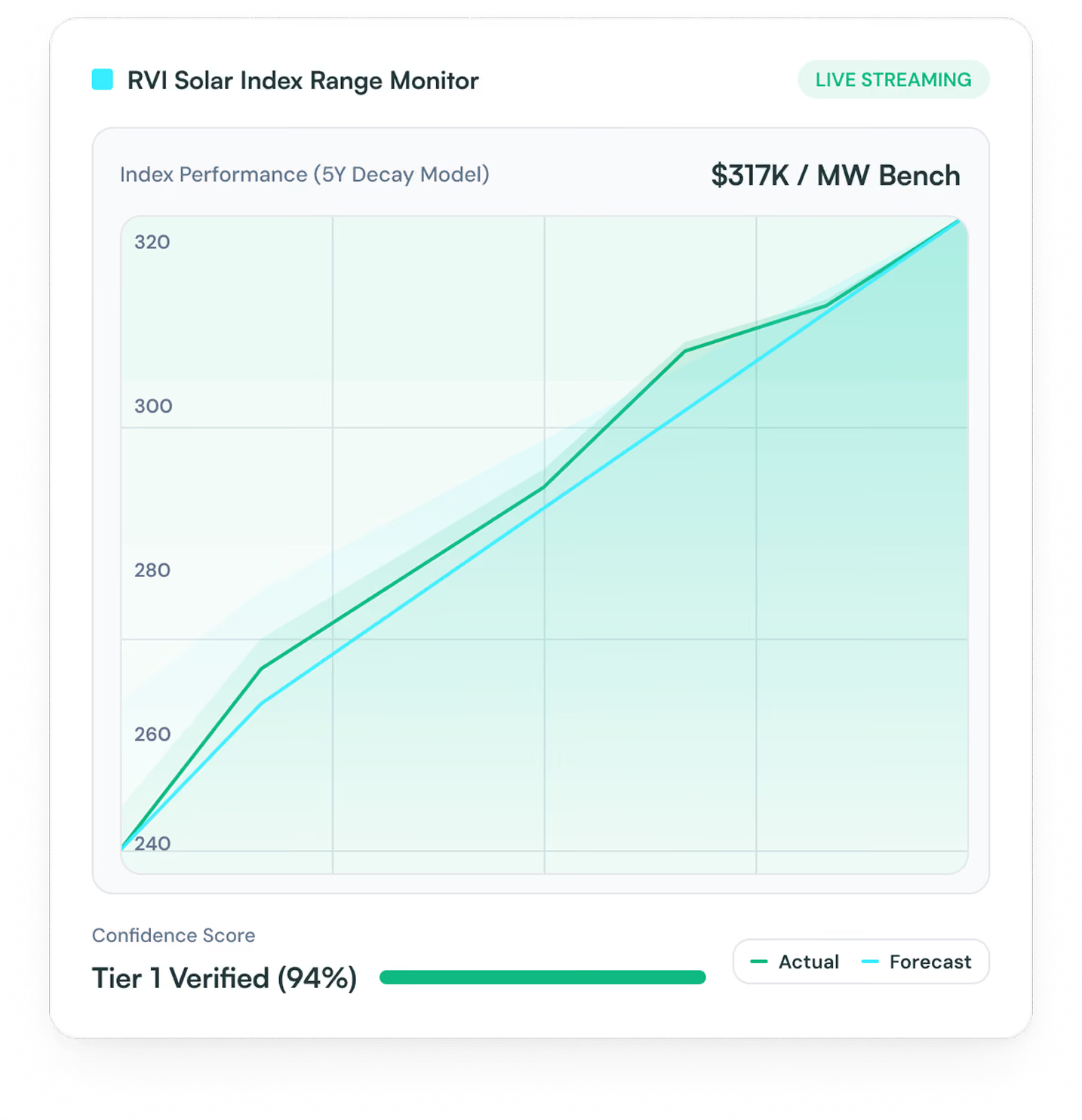
Transaction-backed benchmarks
Value Your Assets in Minutes
Upgrade analysis is often repeated across portfolios.
Buckstop automates valuation and reporting so teams can evaluate upgrade scenarios faster without rebuilding models for every site or asset class.
Frequently Asked Questions
OBBB changed the upgrade math by reinstating 100% bonus depreciation for certain qualified property acquired and placed in service after January 19, 2025, which can materially improve the after-tax economics of repowering or replacing solar equipment. At the same time, OBBB also tightened the timeline and restrictions around clean electricity investment credits for wind and solar, including added foreign entity restrictions and a termination rule for certain wind and solar facilities placed in service after 2027 if construction begins after July 4, 2026. In practical terms, that means the tax advantage of moving sooner can now be more meaningful, while waiting can reduce optionality. For upgrade teams, this shifts the decision from a simple capex question to a timing and capital efficiency question: when bonus depreciation is available, the value of replacing underperforming assets can improve materially, but only if the old asset’s recoverable value is also understood and captured properly.
Waiting starts costing you when the combined loss from lower performance, weaker resale pathways, and delayed tax efficiency exceeds the benefit of deferring capex. The United States reached 1 million solar installations in May 2016, and the country has now passed 5 million installations, so it is reasonable to infer that well over 1 million systems are now at or beyond the 10-year mark. For those older assets, the financial question is no longer just whether they still operate, but whether they are still the best use of capital. As systems age, degradation, maintenance complexity, technology mismatch, and falling buyer appetite can all compress recoverable value. If teams wait too long, they may miss both the optimal resale window and the best timing for reinvestment. That is the point where delay stops being conservative and starts becoming expensive.
Teams often leave behind recoverable value when they treat upgrades as a pure replacement exercise instead of a capital recovery decision. Existing panels, inverters, racking, and related components may still hold value through resale, refurbishment, part-out, or material recovery, but that value is often ignored when upgrade decisions are made too quickly. Without a residual value check first, teams risk scrapping assets that still have market demand or underestimating what can be recovered through alternate pathways. That leads to a distorted upgrade model where the new capex looks larger than it really is because the offsetting value of the outgoing asset was never properly measured. In many cases, the missing piece is not whether the old system has value, but whether anyone quantified it before the upgrade plan was approved.
Yes, repowering can still make financial sense even when existing assets retain resale value, but only if both sides of the tradeoff are modeled together. The correct question is not whether the old asset still has value, but whether the combined benefit of higher output, better efficiency, lower operating risk, and improved tax treatment outweighs the value of keeping the current system in place. In some cases, strong resale value improves the economics of repowering because it reduces the net cost of the upgrade. In others, a still-valuable asset may justify delaying replacement if the incremental performance gain is too small. The decision becomes financially sound only when teams compare, repower, resell, refurbish, and recycle pathways on the same economic basis rather than evaluating the upgrade in isolation.
Asset age affects both resale and scrap pricing because it changes how the market views remaining utility. As assets get older, resale buyers typically apply steeper discounts due to degradation, shorter remaining useful life, compatibility concerns, and higher perceived failure risk. Scrap value, by contrast, is driven more by recoverable materials and commodity pricing, so it tends to be less sensitive to age and more sensitive to composition, logistics, and processing economics. That means there is usually a crossover point where resale value drops faster than scrap value, especially for older or technologically dated systems. At the point of upgrade, understanding where the asset sits on that curve is critical because a few additional years of waiting can materially reduce the better-value pathway.
Yes, recovered value from outgoing assets can offset part of the capital cost of a new upgrade, but only if that value is identified and captured systematically. Too often, old assets are removed as a cost center rather than managed as a source of recoverable capital. If components still have resale demand, refurbishment potential, or recoverable material value, those proceeds can reduce the effective upgrade cost and improve project returns. The offset may not fund the full replacement, but it can meaningfully narrow the capital gap, improve payback, and strengthen investment committee confidence. In portfolio settings, even modest recovery on each asset can compound into a significant capital offset across the full upgrade program.
Buckstop models upgrade tradeoffs across a portfolio by evaluating the outgoing asset and the upgrade pathway in the same decision framework. Instead of treating each site as a separate spreadsheet exercise, it applies consistent, transaction-backed residual value logic across resale, refurbishment, recycling, and scrap outcomes, while also accounting for upgrade timing, asset age, and pathway economics. That allows teams to compare whether a system should be kept longer, upgraded now, or retired through the highest-value recovery route. The advantage is speed, but also consistency. When the same portfolio is being reviewed by finance, operations, and strategy teams, Buckstop reduces manual rework and gives all of them a defensible basis for deciding where capital should go first.
.png)